Most people who start looking into teeth whitening are really asking one quiet question: will it actually work for me? It is a fair thing to wonder. The photographs you see online tend to show the most dramatic transformations, and that can leave you in one of two camps. Either you expect a film-star result and feel let down by anything less, or you quietly assume your own teeth are a lost cause before you have even begun.
The honest answer sits somewhere in the middle. Whitening works for the vast majority of people, but the results are not identical for everyone, and they were never going to be. How much your smile brightens depends on what is staining your teeth in the first place, the natural colour you started with, the condition of your enamel, and which method you choose to use. Two people can follow exactly the same treatment and walk away looking noticeably different, and neither of them did anything wrong.
This page is meant to give you a clear, level-headed picture of what whitening results genuinely look like. It covers what a result actually means, how the main methods compare, what makes the difference between a modest lift and a striking change, how long the brightness lasts, and how to keep it. There is no hype here and no promises that cannot be kept. The aim is simply to help you decide whether whitening is right for you, and to know what to expect if you go ahead.
What a Whitening Result Really Means
When people talk about whitening results, they usually mean two slightly different things that tend to get bundled together. Understanding the difference is the single most useful thing you can do before you start, because it explains almost everything about why results vary.
The first is stain removal. Coffee, tea, red wine, dark berries, cola, richly coloured sauces, and tobacco all leave a film and surface staining on the enamel over time. This is the layer that builds up gradually and dulls a smile without you really noticing the day-to-day change. Clearing it away can make teeth look markedly cleaner and brighter without changing the underlying tooth colour very much at all,visit https://chelmsford.lateethwhitening.co.uk/about-us/. A great deal of the immediate satisfaction people feel after a whitening session is exactly this: years of accumulated surface stain lifted in one go, revealing the brighter tooth that was underneath the whole time. To learn more about our Chelmsford team and services.
The second is shade change, which means lightening the actual colour of the tooth structure itself rather than just cleaning the surface. This is what most professional whitening gels are designed to do. The active ingredient works its way into the enamel and breaks down the compounds that give teeth their colour, lifting the whole tooth a step or two lighter. This is the deeper, more lasting kind of change, and it is the part that genuine whitening achieves over and above a thorough clean.
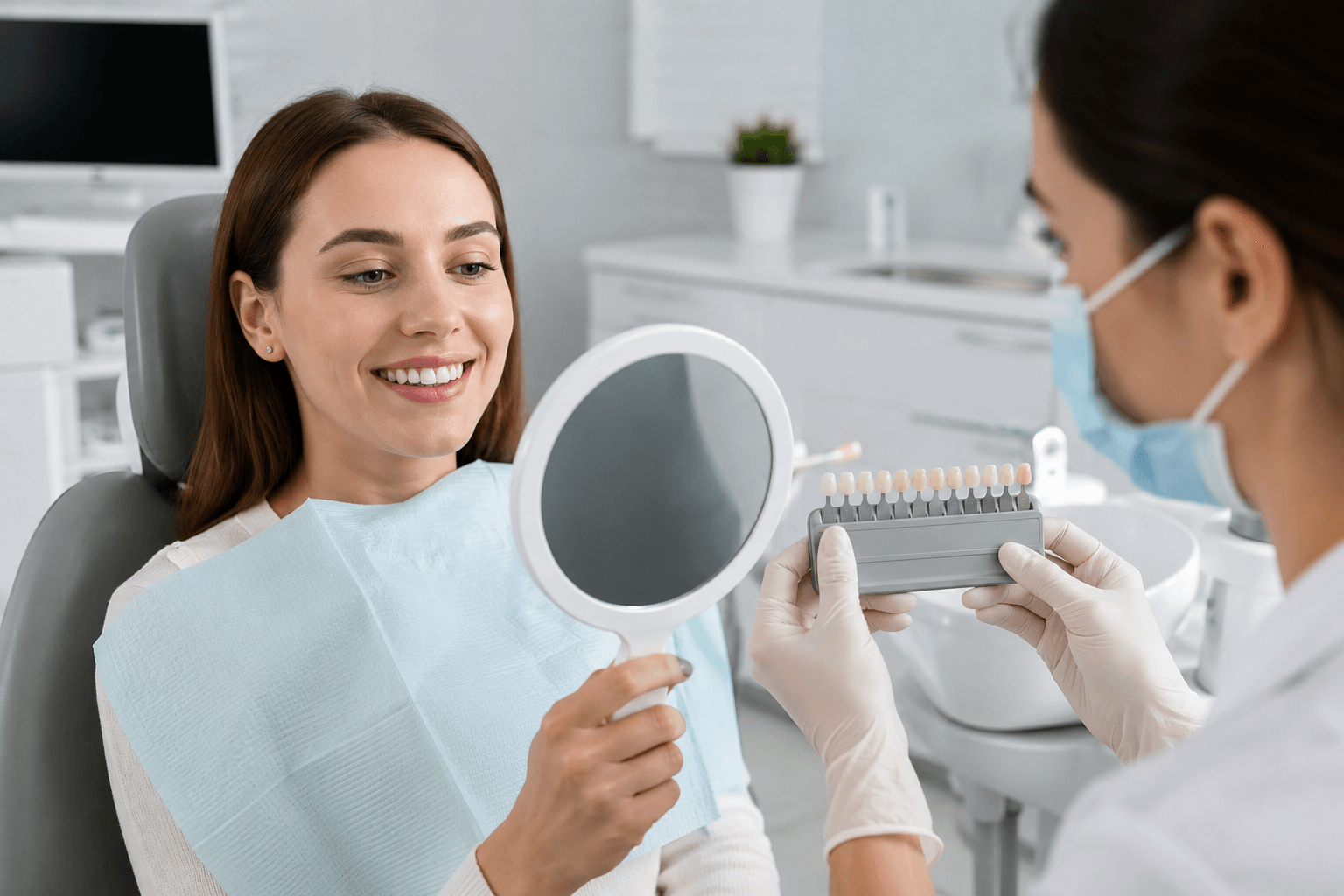
Dentists often measure this progress against a shade guide, and the VITA scale is the most widely used. Teeth are matched to a tab on the guide before treatment, and matched again afterwards, with the result described as a number of shades lighter. A typical professional outcome lands somewhere from a few shades to a more substantial jump, and the stronger in-chair treatments can push further still.
Here is the part that catches people out. A shade is not a fixed, absolute amount of brightness that can be promised in advance. It is a relative measure of movement along the guide. Two people who both move several shades lighter can end up looking quite different from one another, because they began at different points on the scale. Someone starting from heavily stained teeth has more visible distance to travel and often sees the most dramatic before-and-after, while someone whose teeth were already fairly light to begin with sees a subtler, more refined improvement. Both are good results. They simply do not look the same in a photograph.
Setting Honest Expectations From the Start
Whitening makes teeth lighter and brighter. It does not turn them a uniform, blinding white, and frankly it should not. The best results still look like teeth, just a fresher and cleaner version of your own. A natural, healthy brightness ages far better and reads far more believably than the flat, artificial white that no real tooth ever has. If your goal is a smile that looks like you on a very good day, whitening can deliver that. For examples of real Chelmsford before-and-after results, visit https://chelmsford.lateethwhitening.co.uk/before-after-laser-teeth-whitening-results/. If your goal is the colour of a bathroom tile, that is a different conversation, and usually not a whitening one.
A handful of points are worth knowing before you begin, because they shape what is actually achievable.
Whitening only works on natural tooth enamel. It does not change the colour of crowns, veneers, bonding, fillings, or dentures. If you have visible dental work towards the front of your mouth, the natural teeth around it will lighten while those restorations stay exactly the shade they always were. That mismatch surprises people who were not warned about it, and it is one of the most common sources of disappointment. It is entirely avoidable with a little planning, which we will come back to.
Results are also not permanent. Whitening is not a one-and-done fix that lasts forever, and any product or claim suggesting otherwise deserves a healthy dose of scepticism. Teeth gradually pick up stain again, especially if the diet and habits that dulled them in the first place have not changed. Most people see their brightest result settle very slightly over the first week or two, then hold for a good while with a little upkeep. Think of it less like painting a wall and more like a fresh haircut: lovely now, and worth maintaining.
Finally, deeper or unusual discolouration behaves quite differently from everyday staining. Teeth that are grey-toned, discoloured from certain medications taken in childhood, or darkened because of changes inside the tooth do not always respond to standard whitening the way coffee and tea stains do. That does not mean nothing can be done, but it does mean the expectations and the approach should be set with a dental professional rather than guessed at with a product from a shelf.
Why Teeth Become Discoloured
It helps to know what you are actually trying to shift, because the cause of the discolouration is the biggest single predictor of how well whitening will work. Tooth staining falls broadly into two types, and most people have a mix of both.
Extrinsic staining is on the outside of the tooth. It comes from the things that pass over your teeth every day: coffee, tea, red wine, cola, dark fruits, soy and tomato-based sauces, and tobacco in any form. Over months and years these build a stained film on the enamel surface. The good news is that extrinsic staining is exactly what whitening, and even a good professional clean, handles best. If the dullness in your smile is mostly this kind, you are in the most responsive group and your before-and-after is likely to be satisfying.
Intrinsic staining is colour that sits within the tooth itself rather than on its surface. This can come from the natural thinning of enamel as we age, which lets the darker layer beneath show through; from certain medications; from trauma to a tooth; or from too much fluoride during childhood tooth development. Intrinsic discolouration is more stubborn. Whitening can still help in many cases, but it works more slowly and less predictably, and grey tones in particular tend to resist more than yellow and brown ones. This is the type where a professional opinion genuinely pays off, because the realistic expectation is different and there may be better-suited approaches.
Age sits across both categories. As the years pass, enamel naturally wears a little thinner and the underlying dentine darkens, so teeth tend to drift yellower and duller regardless of how careful you are. Whitening still works at any age, but the starting point keeps moving, which is part of why the results you would have got at twenty-five differ from the results at fifty-five.
How the Different Methods Compare
There is no single best way to whiten. Each method trades off speed, strength, cost, and convenience in a different way, and the right choice depends as much on your timeline and temperament as on your teeth. Here is how the main options actually perform when it comes to results.
Laser and Light-Activated Whitening
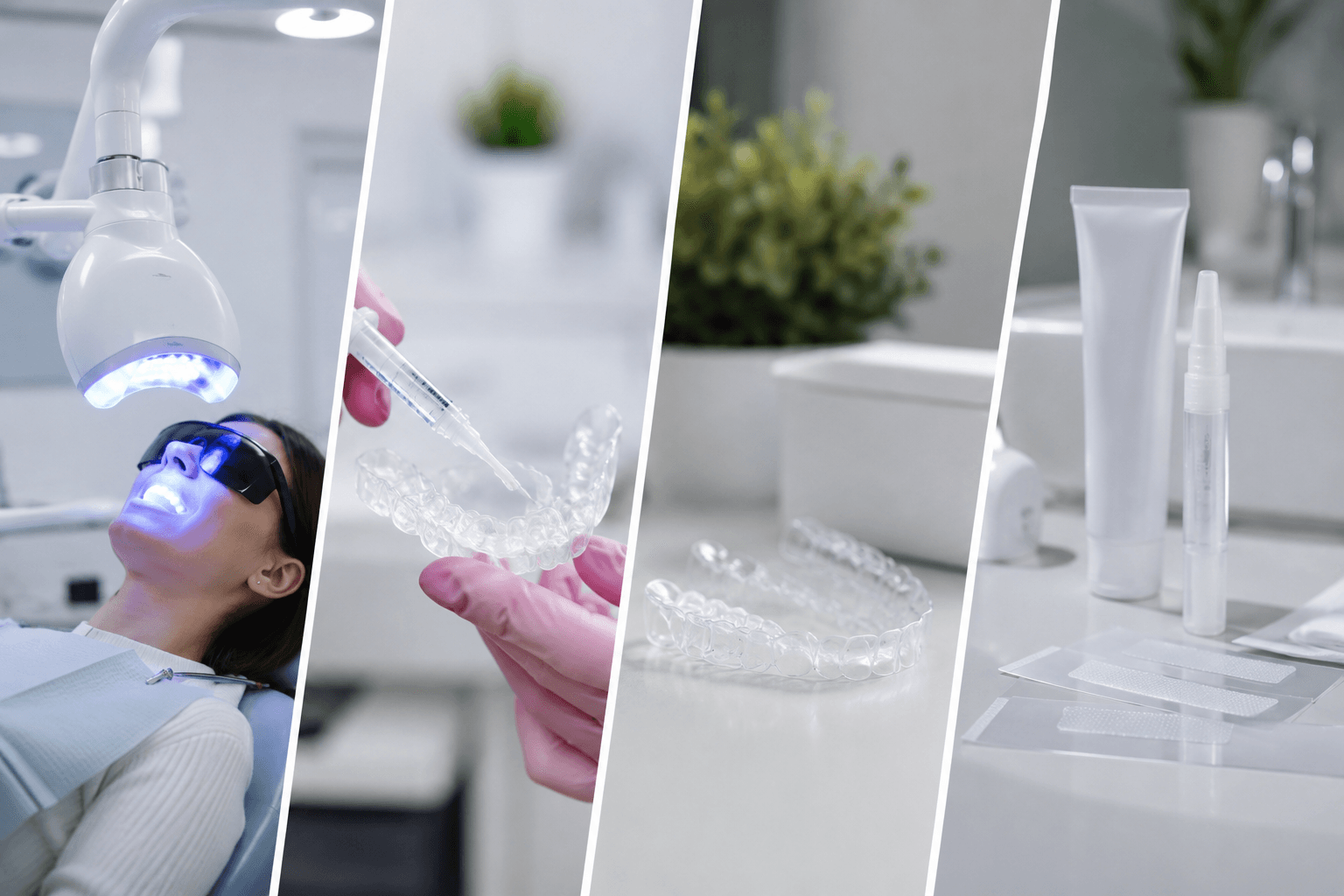
This is the in-chair treatment most people picture. A protective barrier is placed carefully over the gums, a whitening gel is applied to the teeth, and a light, sometimes described as a laser, is used to help activate it. Despite the name, this is not a cutting laser and there is nothing aggressive about it; it is a light source intended to speed the gel along. The whole appointment usually runs to around an hour, often in a single sitting.
The appeal here is speed and a visible result the same day. You walk in, sit through the session, and leave brighter than you arrived. For anyone who wants a noticeable change before a specific event, a wedding, an important interview, a holiday, a big reunion, that quick turnaround is the main attraction. There is no waiting around for results to build over weeks.
On the question of results, light-activated treatments can produce a strong and immediate lift. One thing worth knowing is that part of the dramatic instant brightness is down to the teeth being slightly dehydrated during the process, which temporarily makes them look whiter than they will once they rehydrate. The true settled result becomes clear over the following few days as the teeth return to normal. That is completely normal and not a sign of anything going wrong; it simply means the photograph taken the moment you stand up is showing you the optimistic version. The genuine, settled shade improvement still tends to be among the more noticeable of all the options.
In-Chair Professional Whitening Without a Light
A great deal of professional whitening is carried out in the chair using a higher-strength gel applied directly to the teeth, with no light involved at all. The research on whether the light meaningfully adds to the final result is mixed, and many practitioners achieve excellent outcomes from the gel alone. The light may help the process feel faster and more high-tech, but the chemistry doing the real work is in the gel.
The results from this approach are broadly comparable to light-activated treatment, because the heavy lifting is being done by the whitening agent in both cases. If you have seen two clinics offer what sound like rival technologies, it is reassuring to understand that the underlying mechanism is much the same. The choice between them is less about which gives a better result and more about preference, comfort, and what a particular professional recommends for your teeth.
Custom Take-Home Tray Systems
With this option, impressions or digital scans of your teeth are used to make trays that fit your mouth precisely. You fill them with a professional-grade gel and wear them at home, usually for a set period each day across one to two weeks. It is the slow-and-steady member of the family.
The trade-off here is patience in exchange for control and gentleness. It takes longer than a single in-chair session, but the custom fit means the gel sits evenly against every tooth, and the gradual build tends to be comfortable and uniform. Many people find the final result every bit as good as an in-chair appointment; it simply arrives over a fortnight rather than in an hour. There is a quiet bonus, too. Once you have the custom trays, they become a convenient tool for occasional top-ups months or years later, so you can refresh your result at home without starting from scratch each time.
For people who are nervous about sensitivity, the take-home approach can be a kinder route, because the lower concentration and the spacing out over days give the teeth time to settle between applications. It rewards consistency more than intensity.
Over-the-Counter Options: Strips, Pens, Toothpastes, and More
These are the products you buy and use entirely on your own: whitening strips, paint-on pens, rinses, charcoal pastes, and the familiar whitening toothpastes. Their honest place is at the gentle end of the scale, and it helps to know what each one can and cannot do.
Whitening toothpastes mostly work by removing and limiting surface stain rather than changing the colour of the tooth. That makes them good for maintaining brightness and slowing the return of stains, but not for delivering a big change on their own. They are a maintenance tool, not a transformation tool, and they are most useful after a result has already been achieved.
Strips and pens can produce a mild lift over time because they do contain a low-strength whitening agent. The limitations are that they are weaker than professional gels, the coverage is less precise, and uneven application can leave patchy or streaky results, particularly around the edges of teeth and in the gaps between them. Used carefully and consistently, they can freshen a smile a little. Used hopefully against deep staining, they tend to disappoint.
Charcoal products deserve a specific mention because they are heavily marketed. Charcoal is abrasive and may scrub away some surface stain, which can create a short-lived impression of whiteness, but it does not actually whiten the tooth, and the abrasiveness can wear at enamel over time. A whiter-looking tooth with thinner enamel is a poor trade, and thinner enamel can eventually look duller, not brighter. It is a good example of a product that targets appearance over substance.
For someone with light surface staining who wants a subtle freshen-up, over-the-counter options can be enough and there is nothing wrong with starting there. For anyone hoping for a significant shade change, they tend to underwhelm, which is precisely why so many people who begin with a box from the shelf end up moving on to a professional option later.
What Really Affects Your Results
Two people can use the very same method and walk away with quite different outcomes. These are the factors that explain why, and being honest with yourself about them is the best way to predict your own result before you spend anything.
- Your starting shade. The further your teeth sit from white to begin with, the more visible the change can be, which is why heavily stained teeth often produce the most dramatic before-and-after. The flip side is that very stained or very dark teeth may need more than one round to reach the brightness you are picturing.
- The type of discolouration. Yellow and brown staining from food, drink, and smoking generally responds well and predictably. Grey-toned discolouration and staining that comes from within the tooth are more stubborn and far less predictable.
- Surface stain versus deep colour. If your dullness is mostly surface stain, even a gentle treatment or a thorough professional clean can make a striking difference. If it is the natural colour of the tooth, you will need an actual whitening agent to shift it, and a clean alone will not get you there.
- Enamel and tooth condition. Healthy enamel whitens more evenly. Worn enamel, exposed root surfaces near the gum line, and certain spots on the teeth can take up whitening differently, which sometimes shows as temporary unevenness that settles over the following days.
- Age. Teeth naturally darken and yellow over the years as enamel thins and the layer beneath shows through more. Whitening still works, but the baseline keeps shifting, so the same person sees different results at different stages of life.
- Lifestyle and habits. Coffee, tea, red wine, cola, dark sauces, and smoking are the usual culprits behind staining that returns quickly. They do not stop whitening from working, but they do largely determine how long your result holds afterwards.
None of these factors is a reason to avoid whitening. They are simply the variables that turn a general expectation into a personal one. The more of the favourable factors you have, the more dramatic and durable your result is likely to be.
How Long Results Last, and How to Keep Them

This is the part people most often wish someone had explained at the start. Whitening is not permanent, but how long it lasts is largely within your control, and that is genuinely good news rather than a catch.
With sensible habits, a good professional result commonly holds for several months to a year or more before a top-up becomes worthwhile. Heavy coffee drinkers and smokers tend to sit at the shorter end of that range, while people who are careful with staining foods and drinks can stretch their brightness considerably longer. Take-home trays and over-the-counter top-ups make it easy to nudge the result back up whenever it starts to drift, so for many people maintenance is a small, occasional task rather than a fresh start each time.
A few simple habits make a real and measurable difference to how long you keep your result:
- Rinse your mouth with water after coffee, tea, wine, cola, or anything strongly coloured. A quick rinse clears the worst of the staining film before it has a chance to settle in.
- Avoid sipping stain-heavy drinks slowly across the whole day. A coffee enjoyed in twenty minutes stains far less than the same coffee nursed over two hours, because it is the prolonged contact that does the damage.
- Use a straw for cold drinks where it makes sense, so they largely bypass the front teeth that show most when you smile.
- Keep up consistent, thorough brushing and do not skip your regular dental visits. A professional clean removes the everyday surface stain that quietly dulls a result, and it is one of the most effective and underrated forms of maintenance.
- Be especially careful in the first day or two after professional whitening. Teeth are temporarily more receptive to staining straight after treatment, so steering clear of dark foods and drinks during that short window protects the fresh result.
Treat the result as something you maintain rather than something that simply expires, and the upkeep becomes light and routine. The people who are happiest with whitening over the long term are almost always the ones who adjusted a couple of small habits, not the ones who chased the strongest possible treatment and then carried on exactly as before.
Preparing for the Best Possible Result
A little preparation makes a noticeable difference to the outcome, and most of it costs nothing. The single most valuable step is to start with healthy teeth and gums. Whitening sits best on a clean, healthy foundation, so having any outstanding dental issues looked at first, and ideally having a professional clean beforehand, helps the gel work evenly and comfortably. Whitening is not a treatment for problems other than colour, and it should never be used to paper over an issue that wants attention in its own right.
Timing around dental work matters too. If you are planning new crowns, veneers, or visible fillings, it is far better to whiten your natural teeth first and then have the new restorations colour-matched to your brighter shade. Doing it the other way around leaves you with dental work that no longer matches once the surrounding teeth are lightened. If you have recently had work done, it is worth waiting until everything has settled before whitening, and checking on the right timing rather than rushing in.
If you already know your teeth are sensitive, flag it before you begin rather than gritting your teeth through discomfort. There are gentler concentrations, ways to space out the treatment, and desensitising approaches that keep the whole thing comfortable. Going in with a plan beats pushing through and regretting it.
Finally, set your own expectation deliberately. Decide what a good result looks like for you, ideally with a professional comparing your current shade to what is realistically achievable, rather than measuring yourself against a stranger's photograph online. A result that genuinely suits your face and looks like a healthier version of you is a far better target than an arbitrary maximum whiteness.
Who Tends to See the Best Results
Whitening tends to work especially well for people whose teeth are generally healthy and whose dullness comes from age or from everyday food-and-drink staining. Yellowed teeth from years of coffee, tea, or smoking are often the most satisfying of all to treat, because there is a great deal of visible stain to lift and the underlying teeth respond well to the gel. If that describes you, your before-and-after is likely to be one of the more striking ones.
Results are more modest, or simply less predictable, for a few groups. People whose discolouration is grey-toned or comes from inside the tooth see slower and less certain change. Those with a lot of visible dental work towards the front of the mouth will find that the restorations stay put while the natural teeth lighten around them. And anyone hoping that whitening will fix something that is not really about colour at all is aiming at the wrong target.
None of this puts whitening off the table for these groups. It simply means that the right expectations matter more, and that a professional assessment beforehand is the sensible first step rather than an optional extra. Knowing in advance that your particular teeth will give a subtle result, or that a different approach might suit you better, is far kinder than finding out afterwards.
Safety and Sensitivity, Explained Honestly
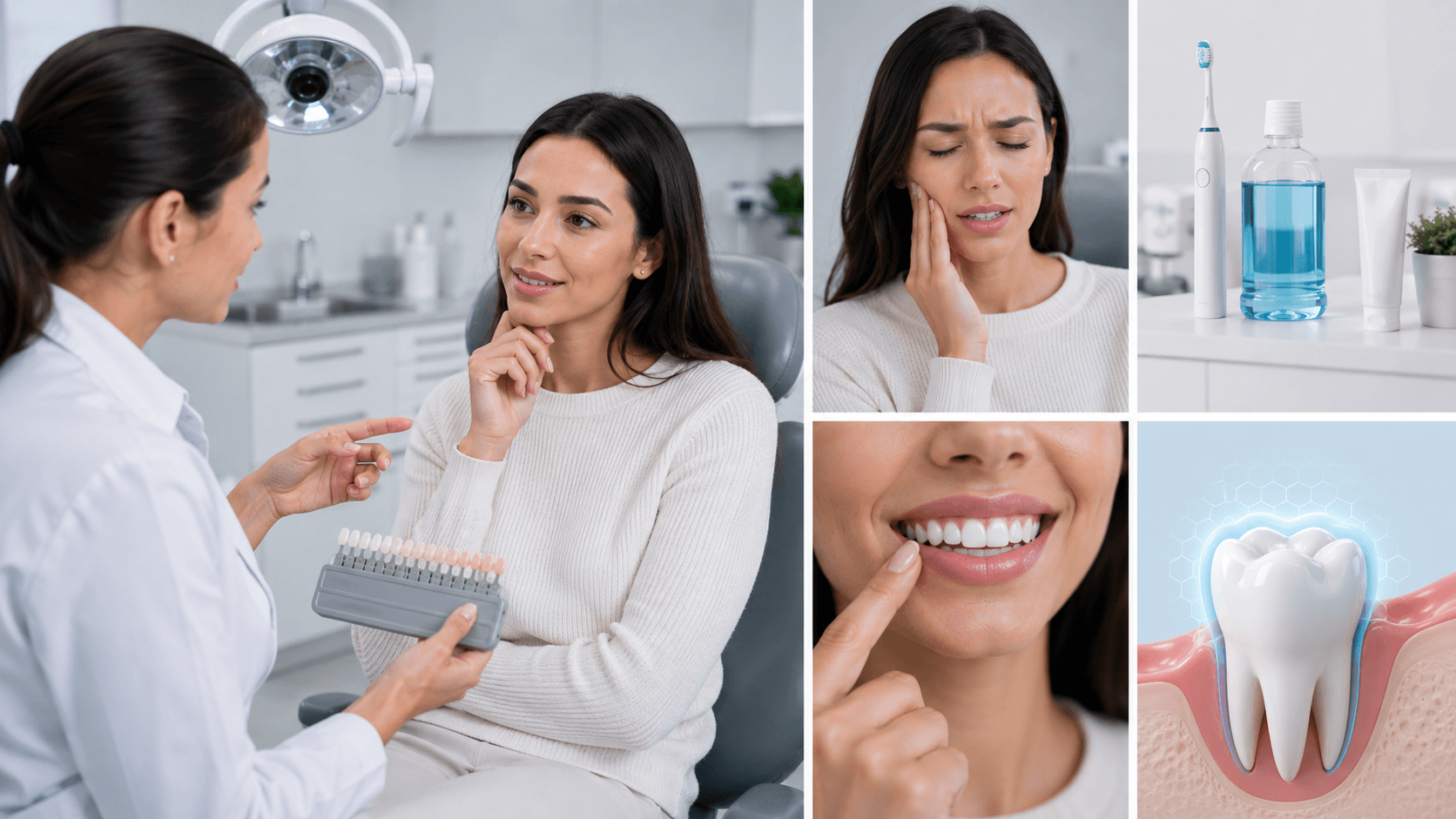
Professional whitening is widely considered safe when it is carried out properly, with the gums protected and an appropriate-strength gel matched to your teeth. The most common side effect by a wide margin is temporary sensitivity. This typically shows up as a short-lived twinge with hot or cold, the odd sharp sensation, or a general tenderness across the teeth for a day or two after treatment. It usually fades on its own and responds well to a sensitivity toothpaste in the days around your appointment.
The reason sensitivity happens is that the whitening process temporarily makes the teeth a little more permeable, so they react more readily to temperature for a while. It is a passing state, not damage, and it settles as the teeth return to normal. Knowing that in advance takes a lot of the worry out of it, because the sensation, while not enjoyable, is expected and brief.
Some people also notice mild, short-lived gum irritation if any gel makes contact with the gums, which is one of the main reasons proper protection during professional treatment matters so much. Lower-strength take-home and over-the-counter products are generally gentler, but they can still cause some sensitivity if they are overused or left on longer than directed, so following the instructions rather than improvising a stronger regime is the wiser path.
If you already have sensitive teeth, it is worth saying so clearly before you start so the approach can be adjusted from the outset. Comfort and a good result are not in competition; a sensible, well-paced treatment delivers both.
Common Myths, Set Straight
A few persistent myths shape people's expectations in unhelpful ways, so they are worth clearing up plainly.
The first is that whiter is always better. In reality, the most flattering result is a natural, healthy brightness that suits your face, not the most extreme white possible. Overdone, uniform white tends to look artificial and ages poorly, while a believable brightness reads as health and freshness.
The second is that whitening damages or weakens teeth permanently. Carried out properly with appropriate products, whitening does not strip the enamel away. The temporary sensitivity that some people feel is just that, temporary, and not a sign of lasting harm. The real risk to enamel comes from misusing harsh or abrasive products, not from sensible whitening.
The third is that one treatment lasts forever. As covered earlier, results fade gradually as teeth pick up new stain, and maintenance is part of the deal. Any claim of permanent whitening should be treated with suspicion rather than excitement.
The fourth is that natural or home remedies whiten as well as professional treatment. Abrasive scrubs and acidic home mixtures may briefly polish the surface, but they do not change the colour of the tooth and some can quietly wear at enamel. A short-term cosmetic impression is not the same thing as a genuine, lasting result, and it can come at a cost.
Your Questions, Answered
Will whitening work if I have recently had dental work?
It is best to wait until any recent treatment has fully settled, and to whiten your natural teeth before having new visible restorations made. That way crowns, veneers, or front fillings can be colour-matched to your newly brightened shade. Whitening will not change the colour of existing dental work, so timing it sensibly is what avoids an awkward mismatch. If you have had recent work, check on the right timing before going ahead.
Can I whiten if I have gum disease or receding gums?
Active gum disease should be treated and brought under control first, because whitening on inflamed or unhealthy gums is not advisable. With receding gums, the exposed surfaces near the gum line tend to be more sensitive and can respond differently to the gel, so this is a case where a professional assessment beforehand genuinely helps. It does not automatically rule whitening out, but it is something to approach with care and proper guidance rather than on your own.
Does whitening hurt?
For most people it is uncomfortable at worst rather than painful. The usual experience is some temporary sensitivity during or after treatment, brief sharp sensations with hot or cold, or a general tenderness for a day or two, which settles quickly. Properly protected gums and an appropriately matched gel keep things manageable. If you know your teeth are sensitive, say so beforehand so the approach can be adjusted to keep you comfortable.
Are the results permanent?
No, and any product promising permanent whiteness should be met with healthy scepticism. Teeth gradually pick up stain again over time, at a pace that depends heavily on your diet and habits. The result is long-lasting rather than permanent, and it is easy to maintain with good habits and the occasional top-up.
How quickly will I see a difference?
In-chair and light-activated treatments show a visible change the same day, with the true settled result clear within a few days once the teeth rehydrate. Custom trays build up over one to two weeks of consistent use. Over-the-counter products are the slowest and gentlest, often needing a couple of weeks of regular use for a mild change to appear.
Why do my teeth not look evenly white at first?
Slight unevenness immediately after treatment is common and usually temporary. Teeth can take up whitening at marginally different rates, and minor dehydration during in-chair sessions can exaggerate the effect for a short while. In most cases it evens out as the teeth rehydrate and settle over the following days.
How white will my teeth actually go?
That depends on where you start and what is causing the discolouration, which is why no honest answer can be a single number promised in advance. A professional can compare your current shade to what is realistically achievable for your teeth and give you a far more useful estimate than any general claim. The realistic aim is a natural, noticeably brighter version of your own smile, not a fixed maximum that applies to everyone.
Can I whiten if I am pregnant?
It is generally suggested that cosmetic whitening is postponed during pregnancy and breastfeeding, simply as a sensible precaution rather than because of any proven problem. If this applies to you, it is best to raise it directly and wait for clear guidance before proceeding.
Will whitening damage my enamel?
Carried out properly with appropriate products, whitening does not strip away enamel. The temporary sensitivity some people feel afterwards is not the same as lasting damage. The real risk comes from misusing very harsh or abrasive products, which is one more reason to favour a sensible, well-guided approach over the strongest thing you can find.
The Bottom Line
Teeth whitening reliably makes most people's smiles noticeably brighter. The variation is in how much, and that comes down to where you start, what is causing the discolouration, the condition of your enamel, and which method you choose. Light-activated and in-chair treatments give the fastest and strongest change, custom trays match them gradually and gently, and over-the-counter products suit subtle upkeep far more than a dramatic transformation.
Go in with realistic expectations, factor in any existing dental work, start from a healthy foundation, and remember that keeping your result is as much about everyday habits as it is about the treatment itself. The brightest, longest-lasting outcomes belong to the people who set sensible goals and made a couple of small changes afterwards, not to those who chased the most extreme result and then carried on as before.
Whitening does not reinvent your smile, and it was never meant to. What it does, when it is done thoughtfully, is give you back a fresher, brighter version of the smile you already have. For most people, that is exactly the result they were hoping for in the first place.